Garage Door Cable Repair in Westmont, IL
A snapped cable drops one side of the door and twists it in the track. It is a fast repair, but it is not a safe one to leave or to attempt yourself.
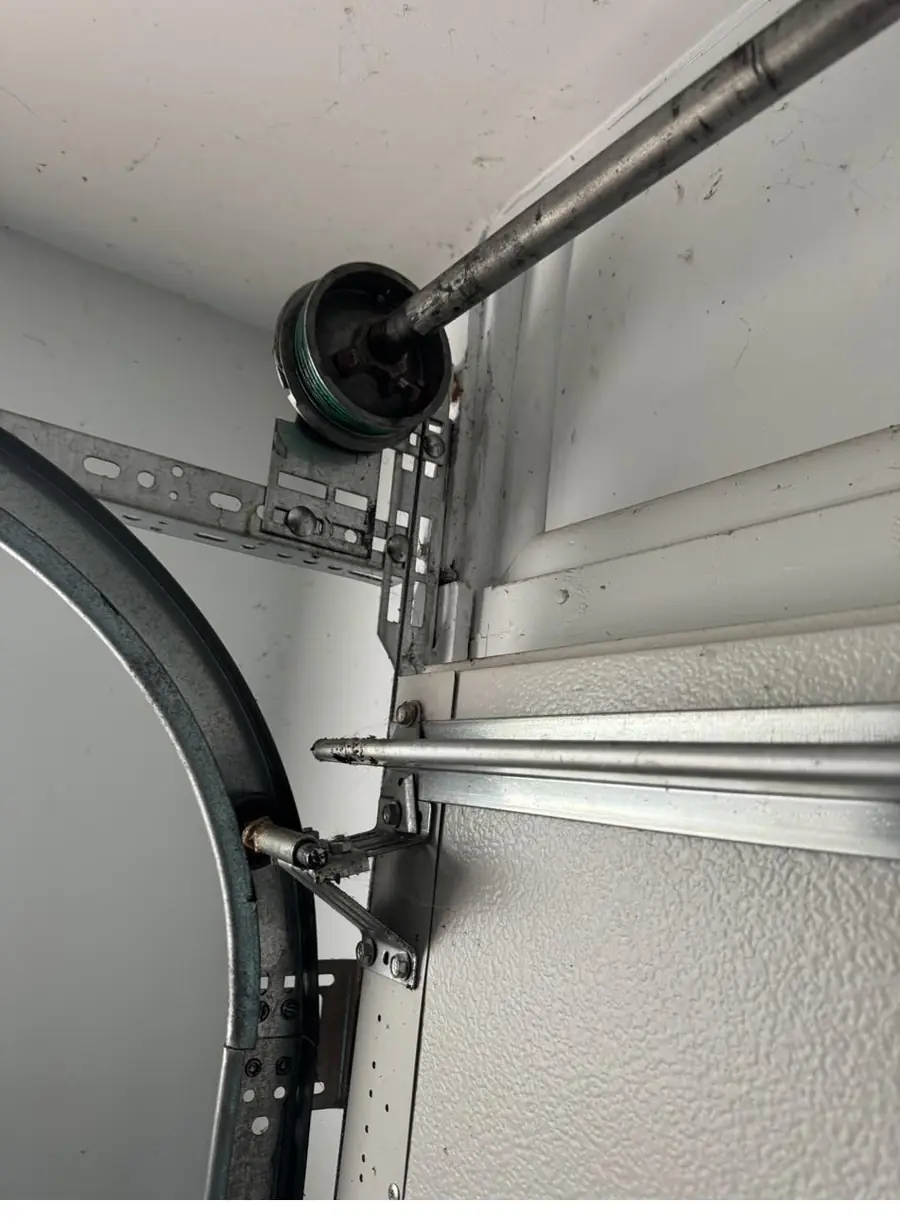
Call right away if you see this
- One side of the door hangs lower than the other
- The door is crooked and jammed in the track
- A cable is visibly loose, coiled on the floor, or unwound from its drum
- Visible fraying or rust on the cable near the bottom bracket
- A grinding or scraping sound as the door moves
What the cables actually do
On a torsion system, a steel cable runs from a bracket at the bottom corner of the door up to a grooved drum on the spring shaft. As the spring winds and unwinds, the drums wind the cables and lift the door evenly on both sides. The cables carry the door's full weight in tension. They are not a redundant part.
When one cable fails, that corner drops instantly while the other side stays up. The door racks in the track, the remaining cable takes a load it was not meant to carry alone, and the door can come out of the track entirely. That is the crooked, jammed door people describe on the phone.
Why cables fail here in particular
Corrosion is the leading cause in this climate. Road salt tracked into the garage all winter sits at the bottom of the opening, which is exactly where the cable anchors to the bottom bracket. That anchor point is the first thing to rust and the usual place a cable lets go. Garages that stay unheated through a Chicago winter, which is most of them, see wet-dry cycling that accelerates it.
The other causes are mechanical: a drum that has not been set with equal wraps on both sides so one cable slowly unwinds; a bottom bracket loosening; and a spring failure that whips and takes the cable with it. That last one is why a spring call and a cable call are often the same call.
The bottom bracket is the dangerous part
The bottom brackets are under the full tension of the spring system through the cables. Loosening one on a door that is not fully supported releases that force violently. The brackets on most doors carry a warning label for exactly this reason, and it is not there for liability decoration.
Doing this properly means securing the door, releasing the spring tension in a controlled way with winding bars, replacing the cables, resetting both drums to equal tension so the door lifts level, then re-tensioning and testing the balance. It is routine work with the right tools and genuinely hazardous without them.
We replace cables in pairs
Both cables have taken identical load and identical corrosion exposure. If one has failed, the other is on the same schedule. Replacing the pair while the tension is already released costs very little extra and avoids a second call.
While we have the door open we check the drums for grooving, the bearings on the shaft, and the bottom brackets for rust, since a corroded bracket will chew through a brand new cable.
Common questions
Can I use my garage door with a broken cable?
No. The door is unsupported on one side and can fall or come out of the track completely. Do not run the opener, and park outside until it is fixed. If the car is inside and you need it, call and we will tell you whether it can be safely lifted by hand.
How long does cable replacement take?
A straightforward pair of cables on a door that has not been damaged is typically an hour to ninety minutes. If the door came out of the track and panels or rollers were bent, it takes longer and we will quote that before starting.
Why did my cable snap when the door looked fine?
Cables corrode from the anchor point at the bottom bracket upward, which is the part you cannot see without looking closely. Winter road salt is the usual culprit in this area. By the time fraying is visible from across the garage, the cable is well past due.
Related services
Spring repair & replacement
A broken spring is the single most common garage door failure, and the one you should never attempt yourself. We replace torsion and extension springs the same day in most cases.
Read more →Off-track & jammed doors
A door off its track is unstable and under load. We reset it properly rather than forcing it back, and fix whatever knocked it out in the first place.
Read more →Tune-up & maintenance
Most emergency calls we take were preventable. An annual tune-up catches the fraying cable and the failing spring while they are still an appointment rather than an emergency.
Read more →Towns we cover
Tell us what the door is doing
A quick description over the phone is usually enough for us to tell you what has failed, what it takes to fix it, and when we can be there. Estimates over the phone are free.
(630) 877-8104