Garage Door Tune-Up and Maintenance in Westmont, IL
Most emergency calls we take were preventable. An annual tune-up catches the fraying cable and the failing spring while they are still an appointment rather than an emergency.
When you need this service
- The door has never been serviced
- It has become noisier over the past year
- It is coming into autumn and you would rather not have it fail in January
- The door moves unevenly or hesitates
- You have just bought the house and do not know the door's history
What a tune-up actually covers
The balance test comes first, because everything else follows from it. With the opener disconnected, the door should hold its position at waist height. If it drops or rises, the spring tension is wrong and that is the finding that matters most — an unbalanced door is quietly destroying the opener.
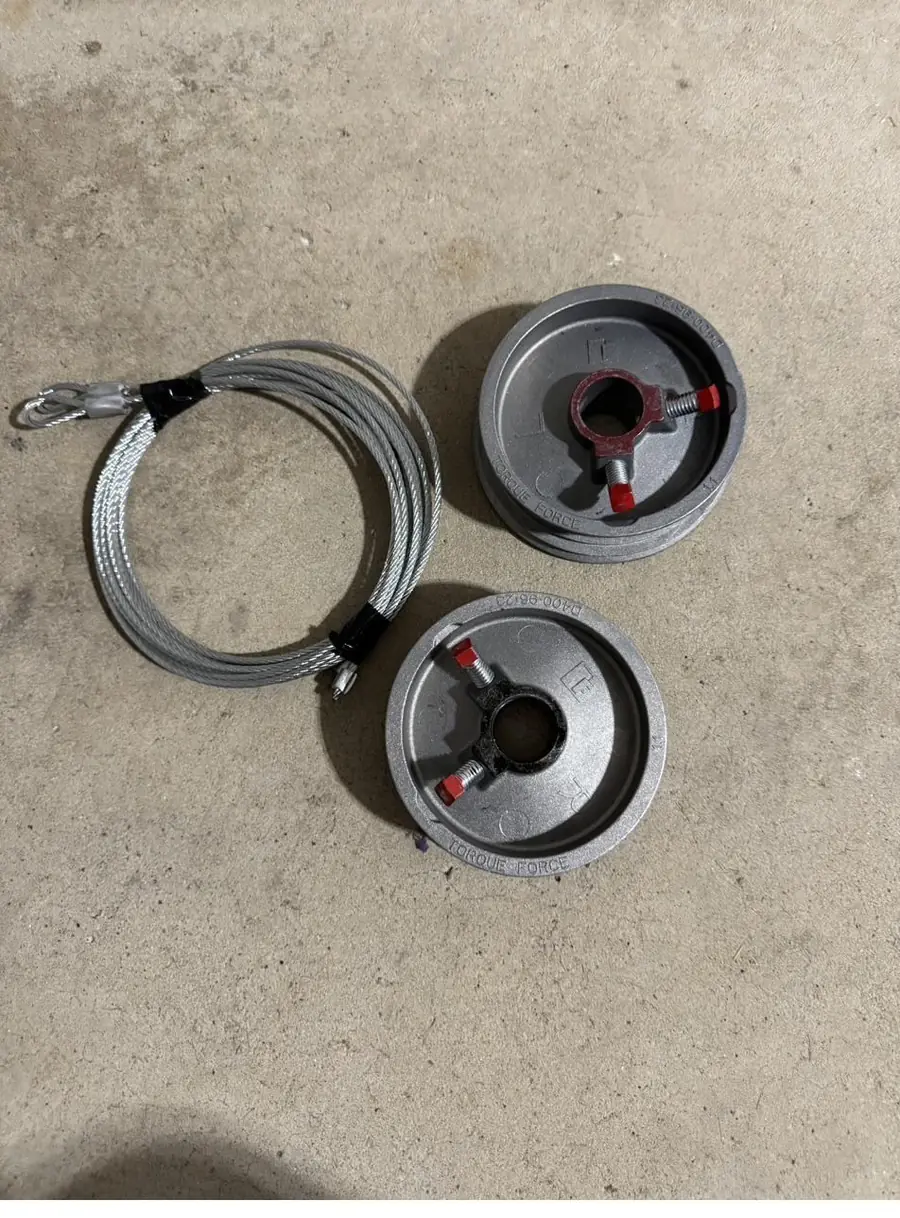
From there: springs inspected for gapping, corrosion and cycle wear; cables checked at the bottom bracket where they corrode first; drums checked for even wrap; rollers checked for flat spots and bearing play; hinges checked for tearing at the screw holes; track checked for alignment and loose brackets; bearings and the shaft checked for play; and the weather seal and threshold checked, since that is what keeps salt water out of the bottom section.
The safety checks are the part people skip
Two tests are required by federal safety standards and take under a minute each. The photo-eye reversal test: with the door closing, break the beam with an object and confirm it reverses immediately. The mechanical reversal test: lay a solid object flat on the floor in the door's path — a length of timber works — and confirm the door reverses on contact rather than pushing through it.
If either test fails, the opener needs adjusting before the door is used normally. These are the systems that stop a door closing on a child or a pet, and they drift out of adjustment gradually enough that nobody notices until they are needed.
Lubrication, done correctly
Lubrication is the one piece of maintenance homeowners can do themselves, and the one most commonly done wrong. Use a garage-door-specific lithium or silicone lubricant on the springs, hinges, rollers, bearings and the opener rail. Do not use WD-40, which is a solvent and displaces the lubricant that should be there, and do not grease the track — the track is a guide surface, and grease on it collects grit and makes things worse.
Twice a year is right in this climate: once in autumn before the cold sets in, once in spring after the salt season. Cold thickens whatever is in the bearings and makes an already marginal door fail on the first hard freeze, which is exactly why January is our busiest month.
Common questions
How often should a garage door be serviced?
Once a year for a normally used residential door. Twice if it is the main entrance to the house and opens many times a day, which describes most households here. Autumn is the best time in Illinois, because it catches problems before the cold finds them for you.
What lubricant should I use on my garage door?
A garage-door-specific lithium or silicone spray, on springs, hinges, rollers, bearings and the opener rail. Not WD-40 — it is a solvent, not a lubricant, and it strips what is already there. Never grease the tracks themselves.
Can a tune-up actually prevent a broken spring?
It cannot stop metal fatigue, but it can catch a spring that is gapping, corroding or visibly tired, and it can find the unbalanced door that is overworking everything else. Plenty of springs give warning signs for weeks. Most people simply are not looking at them.
Related services
Spring repair & replacement
A broken spring is the single most common garage door failure, and the one you should never attempt yourself. We replace torsion and extension springs the same day in most cases.
Read more →Opener repair
Openers fail in a handful of predictable ways, and most of them are repairable. Opener and motor work is what we do most, so we diagnose before recommending replacement.
Read more →Roller replacement
Rollers are the cheapest part on the door and the one most responsible for how it sounds. Swapping worn steel rollers for sealed nylon is the single best value upgrade on an older door.
Read more →Towns we cover
Tell us what the door is doing
A quick description over the phone is usually enough for us to tell you what has failed, what it takes to fix it, and when we can be there. Estimates over the phone are free.
(630) 877-8104