Garage Door Roller Replacement in Westmont, IL
Rollers are the cheapest part on the door and the one most responsible for how it sounds. Swapping worn steel rollers for sealed nylon is the single best value upgrade on an older door.
When you need this service
- Loud rattling, grinding or squealing as the door moves
- The door shudders or hesitates partway through travel
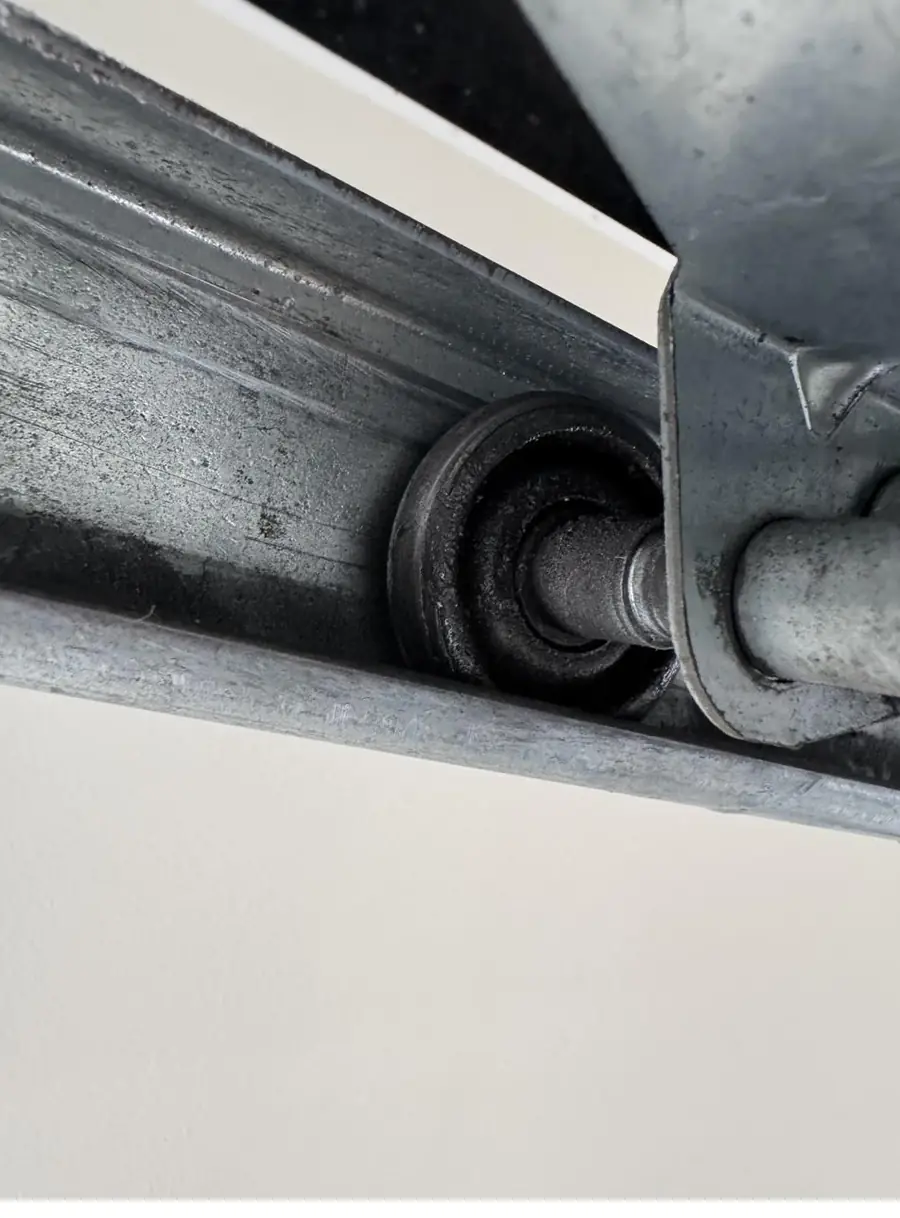
- Visible flat spots, chips or missing bearings on the rollers
- The door binds in the track or feels rough by hand
- Rollers that wobble in their stems
Why an old door is loud
Most doors built before the mid-2000s came with plain steel rollers running on unsealed bearings, or on no bearings at all. Steel on steel is inherently noisy, and as the bearings wear out the roller stops rolling and starts sliding, which turns a rumble into a grind. On a house where a bedroom sits over the garage — the standard layout in most of the 1970s and 1980s subdivisions in this area — that noise is the reason people call.
Worn rollers do not just sound bad. A roller that binds forces the opener to work harder, wears the track, and puts uneven load on the cables and hinges. It is a small part that quietly shortens the life of expensive ones.
Nylon rollers, and what to look for
Sealed nylon rollers with ten or thirteen ball bearings are dramatically quieter and last far longer than the builder-grade steel they replace. The bearings are sealed against dust and salt, which matters in an unheated Illinois garage. Most people describe the difference as the door going from a rumble to a hush.
The number to look at is the bearing count, not the material alone. Cheap nylon rollers with four bearings or no bearings are barely better than the steel they replace. The stem length also has to match the door's track and hinge configuration, which is a detail worth getting right rather than buying a generic set.
The bottom rollers are the ones to be careful with
The rollers in the bottom brackets sit under the cable tension. Removing a bottom bracket on a door under spring load is one of the more dangerous things you can do to a garage door, for the same reason cable work is. The rollers above the bottom bracket can be swapped safely one hinge at a time; the bottom pair should not be.
Because we are already there, roller replacement is commonly done alongside a tune-up or a spring job, which is when it makes the most economic sense — the labour overlaps and the door gets balanced and lubricated at the same time.
Common questions
How long do garage door rollers last?
Builder-grade steel rollers typically last five to seven years of normal use. Good sealed nylon rollers with ten or more bearings commonly run well past a decade. In a salted, unheated garage the steel ones go faster.
Will nylon rollers really make the door quieter?
Noticeably, yes — it is the most reliable noise improvement available on an older door short of replacing the opener. If your garage has a bedroom above it, rollers plus a belt drive opener is the combination that actually solves the problem.
Can I replace rollers myself?
The intermediate ones, carefully, one at a time, with the door closed and the opener disconnected. Not the bottom pair — those sit in brackets under full cable tension and need the spring released first.
Related services
Opener repair
Openers fail in a handful of predictable ways, and most of them are repairable. Opener and motor work is what we do most, so we diagnose before recommending replacement.
Read more →Off-track & jammed doors
A door off its track is unstable and under load. We reset it properly rather than forcing it back, and fix whatever knocked it out in the first place.
Read more →Tune-up & maintenance
Most emergency calls we take were preventable. An annual tune-up catches the fraying cable and the failing spring while they are still an appointment rather than an emergency.
Read more →Towns we cover
Tell us what the door is doing
A quick description over the phone is usually enough for us to tell you what has failed, what it takes to fix it, and when we can be there. Estimates over the phone are free.
(630) 877-8104