Garage Door Opener Repair in Westmont, IL
Openers fail in a handful of predictable ways, and most of them are repairable. Opener and motor work is what we do most, so we diagnose before recommending replacement.
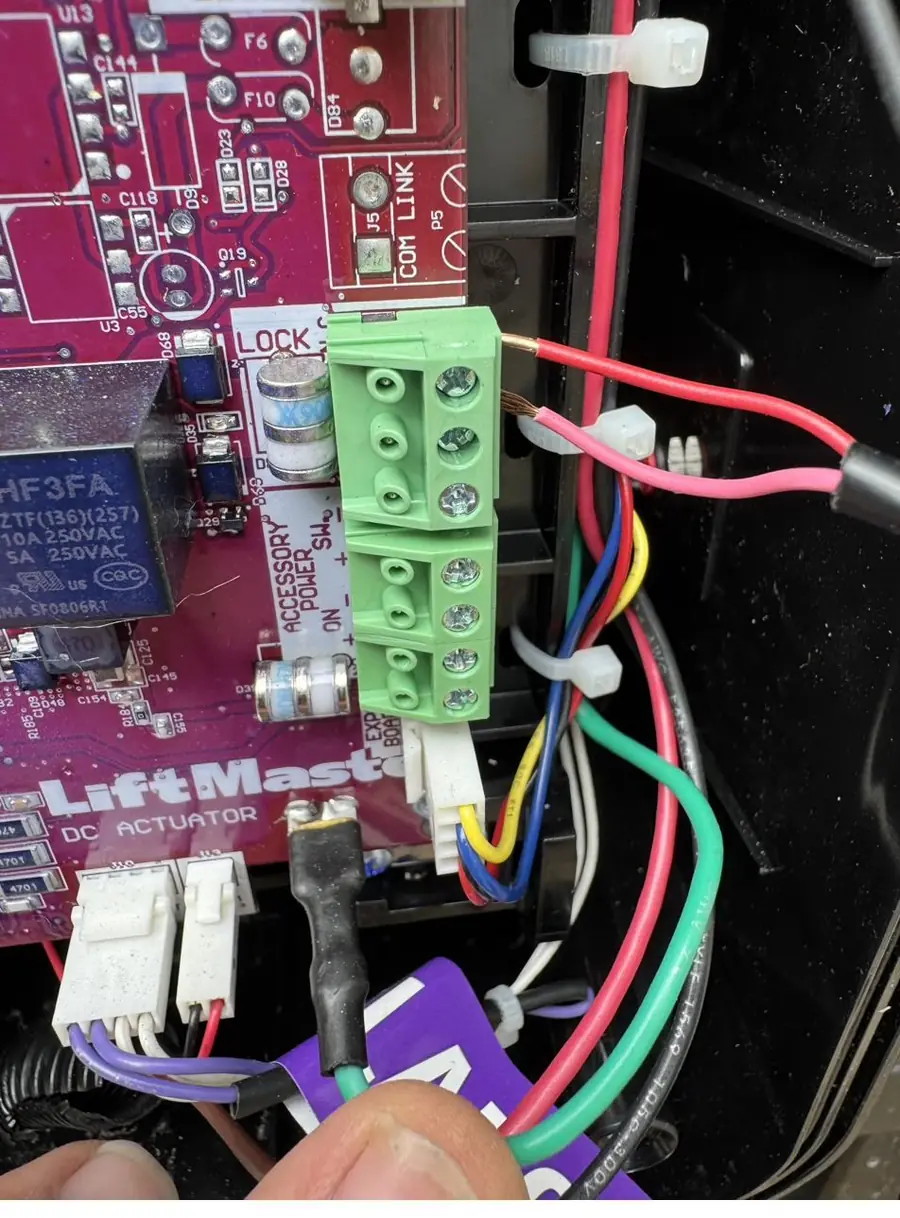
When you need this service
- The motor runs but the door does not move
- The door starts down and immediately reverses back up
- The remote works but the wall button does not, or the reverse
- A grinding noise from the motor head
- The opener works intermittently, or only when it feels like it
- Lights on the motor head blinking in a repeating pattern
The first thing to rule out is the door, not the opener
A large share of calls that come in as opener problems turn out to be door problems. If the springs are worn or the door is out of balance, the opener is being asked to lift far more weight than it was designed for, and it responds by straining, stopping, or reversing. Replacing the opener in that situation buys you a new opener that will fail the same way.
The test takes thirty seconds. Pull the red release cord to disconnect the opener, then lift the door by hand to about waist height and let go. A balanced door stays roughly where you left it. A door that drops or shoots up has a spring problem, and that is what needs fixing first.
Reversing doors are usually sensors, and sensors are usually cheap
Since 1993, federal law has required every residential opener to have photo-eye safety sensors mounted within six inches of the floor on both sides of the opening. If that beam is broken, misaligned, dirty or unplugged, the opener refuses to close and reverses instead. This is far and away the most common cause of a door that will not stay shut.
Misalignment happens for mundane reasons — a bike handlebar, a snow shovel, a garbage can knocking a bracket. Sun glare late in the day can do it too. One LED steady and the other flickering or dark is the classic sign. Often this is a five-minute alignment rather than a part.
What actually breaks inside the motor head
On chain and belt drive openers, the most common internal failure is the plastic drive gear that meshes with the worm gear on the motor shaft. It is deliberately the weakest link, so that it strips instead of burning out the motor. The symptom is unmistakable: the motor runs at full speed and nothing moves, sometimes with plastic shavings in the housing. A gear kit is a routine repair and considerably cheaper than a new opener.
Beyond that: capacitors fail and leave the motor humming without starting; logic boards get taken out by nearby lightning, which is not rare in this area; limit and travel settings drift so the door stops short or pushes into the floor; and on older units the trolley or carriage cracks. Blinking light patterns on LiftMaster and Chamberlain units are diagnostic codes, and reading them is usually the fastest way to the answer.
When repair stops making sense
We will tell you plainly when an opener is not worth fixing. The honest cutoffs are age and safety. Anything manufactured before 1993 has no photo-eye sensors and should be replaced outright, not repaired. Openers older than about fifteen years are usually beyond parts support, and a unit with a failed board and a failed gear is generally worth more as scrap than as a repair.
Openers made before 1996 also lack rolling-code security, which means a fixed code that can be captured and replayed. If yours predates that, replacement is a security upgrade as much as a mechanical one.
Common questions
My garage door reverses right after it touches the floor. What is wrong?
Usually the down-limit or the down-force setting. The opener thinks it has hit an obstruction when it has actually reached the floor. Both are adjustable at the motor head. If adjusting them does not hold, the next suspects are worn rollers binding in the track or a door that has gone out of balance.
Why does my remote work but the wall button does not?
That points at the wired circuit rather than the receiver — usually a broken or shorted low-voltage wire between the wall control and the motor head, a failed wall button, or a loose terminal. It is an inexpensive repair and does not mean the opener is failing.
Is it worth repairing a fifteen-year-old opener?
Sometimes. A single failed gear on an otherwise sound LiftMaster or Chamberlain is worth fixing. A failed logic board on a fifteen-year-old unit with no parts support usually is not. We diagnose first and give you both numbers so you can decide, rather than defaulting to replacement.
Do you work on LiftMaster, Chamberlain, Genie and Craftsman?
Yes, and on Sommer, Overhead Door, Marantec, Linear and Wayne Dalton units as well. Opener and motor work is our main specialty.
Related services
Spring repair & replacement
A broken spring is the single most common garage door failure, and the one you should never attempt yourself. We replace torsion and extension springs the same day in most cases.
Read more →Opener installation
Opener installation is our specialty. We size the unit to your door, not to a shelf price, and set the travel and force correctly so it lasts.
Read more →Tune-up & maintenance
Most emergency calls we take were preventable. An annual tune-up catches the fraying cable and the failing spring while they are still an appointment rather than an emergency.
Read more →Towns we cover
Tell us what the door is doing
A quick description over the phone is usually enough for us to tell you what has failed, what it takes to fix it, and when we can be there. Estimates over the phone are free.
(630) 877-8104