Garage Door Spring Repair in Westmont, IL
A broken spring is the single most common garage door failure, and the one you should never attempt yourself. We replace torsion and extension springs the same day in most cases.
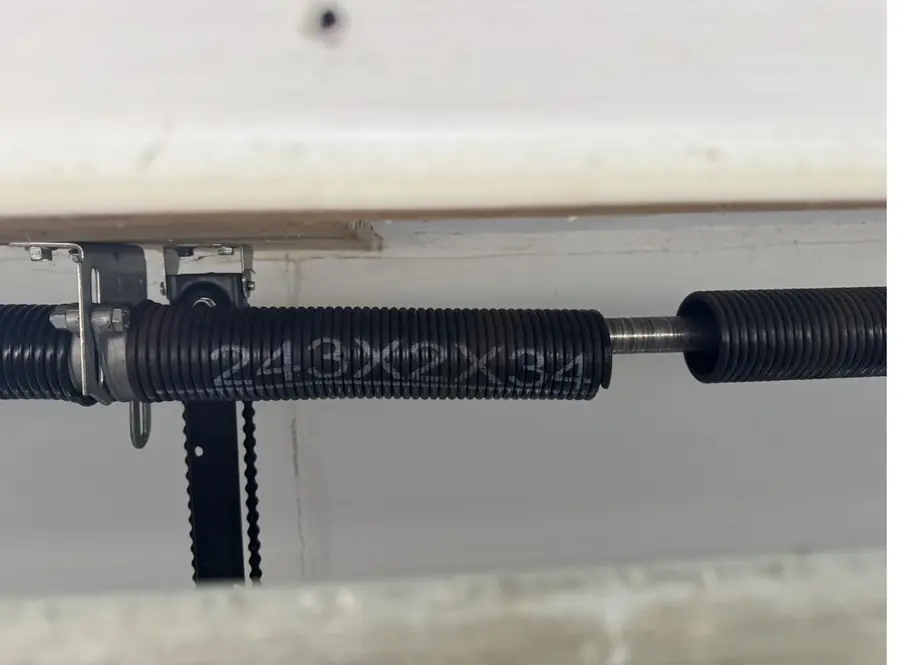
Call right away if you see this
- A loud bang from the garage, then the door will not open
- A visible gap of two to three inches in the spring above the door
- The door lifts a few inches and stops, or feels enormously heavy by hand
- The opener strains, hums, and reverses without moving the door
- The door comes down fast and slams instead of settling
Why springs fail, and why it is always sudden
A garage door spring does essentially all of the lifting. The opener only guides the door and holds it in place; the spring counterbalances the weight, which on a typical double door in this area runs somewhere between 150 and 250 pounds. When the spring breaks, the opener is suddenly asked to lift that entire weight on its own, which it cannot do and was never built to do.
Springs are rated in cycles, not years. One cycle is one full open and one full close. A standard spring is built for roughly 10,000 cycles. A household that opens the door four times a day reaches that number in about seven years; a family with two drivers and a teenager can get there in four. Nothing gradual happens on the way — the steel fatigues invisibly and then separates all at once, usually on a cold morning when the metal is least forgiving. That is why a spring that worked perfectly yesterday is in two pieces today.
Torsion and extension springs are not interchangeable
Torsion springs sit on a steel shaft above the door opening and wind up as the door comes down. Extension springs run along the horizontal tracks on either side and stretch as the door closes. Which one you have determines the repair entirely, and the two systems fail differently: a broken torsion spring leaves a clean gap in the coil, while a failed extension spring often whips sideways and can take the safety cable, the pulley, or a piece of the track with it.
On a double door with two torsion springs, we replace both even when only one has broken. They were installed on the same day and have taken the same number of cycles, so the survivor is typically weeks or months from failing. Replacing one alone means paying for the same service call twice, and it leaves the door unbalanced in the meantime.
Why this is not a do-it-yourself repair
A wound torsion spring holds several hundred pounds of stored energy on a shaft directly above your head. It is released with winding bars, in measured quarter-turns, and a bar that slips becomes a projectile. Every year garage door springs put people in emergency rooms with broken hands, broken jaws and worse. The parts cost is not what makes this job worth paying for — the controlled release of that energy is.
There is also a sizing problem that is invisible from a hardware store shelf. A torsion spring is specified by wire diameter, inside diameter, length and wind direction, and a spring that is close but not correct will either fail early or leave the door unbalanced, which then destroys the opener. We measure the existing spring and the door weight rather than guessing.
What we do on a spring call
We secure the door, release the tension on the remaining spring safely, and remove the broken set. We measure the door and confirm the correct spring specification rather than matching by eye. After the new springs go on, we balance the door by hand — a correctly balanced door will stay put when you stop it halfway, with the opener disconnected. Then we check the cables, drums and bearings, because a spring failure often takes the cable with it, and we reconnect and test the opener's force and travel settings against the new balance.
Most spring jobs are finished in one visit. The truck carries the common torsion sizes for the door types found across DuPage County, which is the great majority of what we see.
Common questions
Can I still open my garage door if the spring is broken?
Manually, with help, and only if you must get a car out. It will be extremely heavy and it can fall. Do not use the opener — pulling against a broken spring is how a working opener becomes a dead opener, and it turns a spring repair into a spring and opener repair. Pull the red release cord and lift with another person, or leave it and call.
How long does a garage door spring last?
A standard spring is rated for about 10,000 cycles, which works out to roughly seven years at four openings a day. High-cycle springs rated for 20,000 or more cost more up front and are worth it on a door that gets heavy daily use. Cold matters too: Illinois winters are hard on spring steel, which is why so many break in January and February.
Should I replace both springs if only one broke?
Yes, on a two-spring door. Both springs have identical cycle counts, so the intact one is near the end of its life as well. Replacing the pair costs less than paying a second service call in a few months, and it keeps the door balanced.
Do you carry springs on the truck?
We carry the common torsion sizes for the door types found across Westmont, Downers Grove, Darien and the surrounding towns, which covers most calls in a single visit. Unusual sizes, very wide doors and some older extension setups may need a part ordered, and we will tell you that on the phone or at the door rather than after.
Related services
Cable repair
A snapped cable drops one side of the door and twists it in the track. It is a fast repair, but it is not a safe one to leave or to attempt yourself.
Read more →Tune-up & maintenance
Most emergency calls we take were preventable. An annual tune-up catches the fraying cable and the failing spring while they are still an appointment rather than an emergency.
Read more →Emergency repair
Some garage door problems can wait for an appointment. A door stuck open, a car trapped inside, or a door that has come down on something cannot.
Read more →Towns we cover
Tell us what the door is doing
A quick description over the phone is usually enough for us to tell you what has failed, what it takes to fix it, and when we can be there. Estimates over the phone are free.
(630) 877-8104